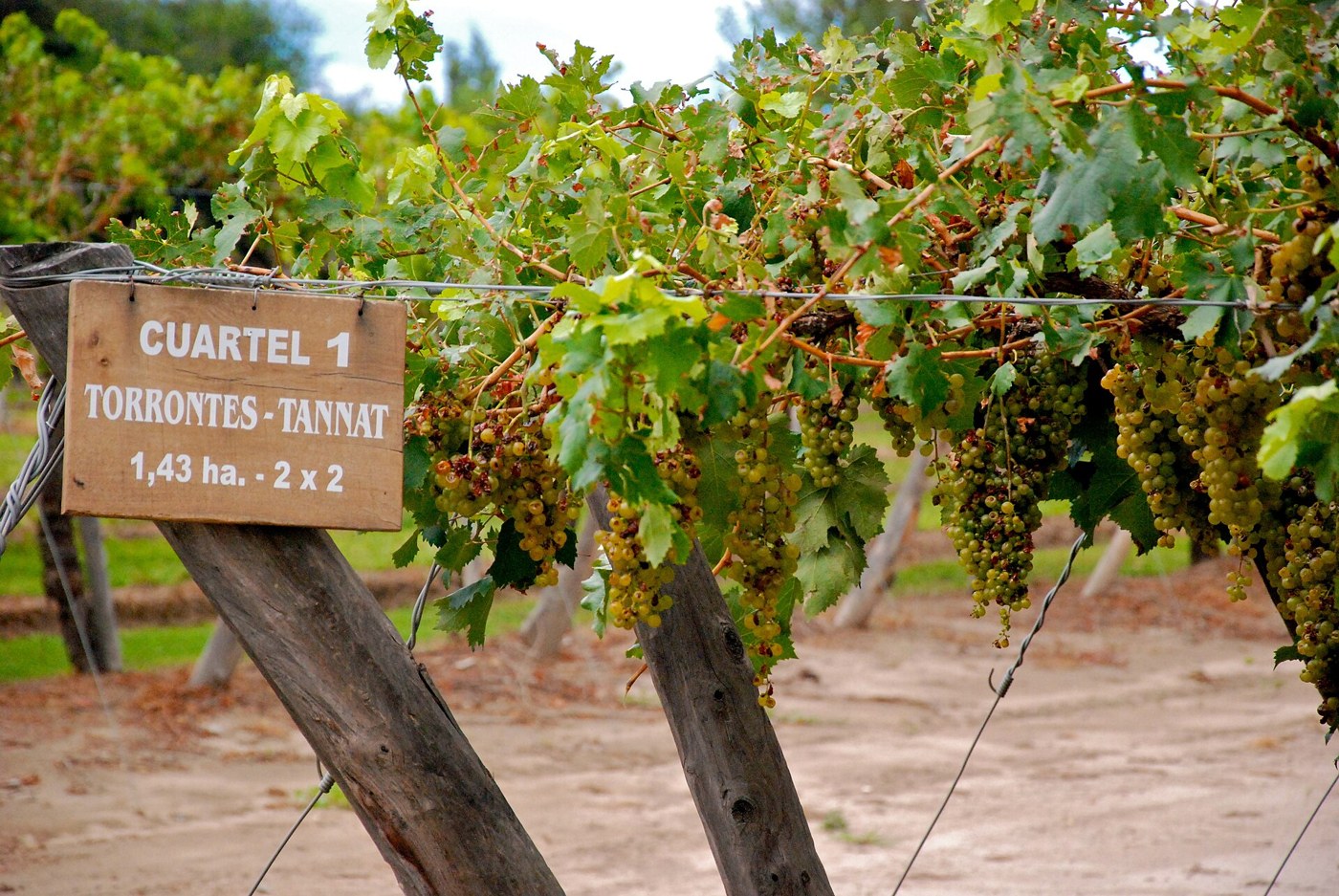

A wine can smell floral or fruity without tasting sweet. That distinction is one of the most useful introductions to the Torrontés associated with Cafayate. Aroma anticipates an experience, while taste and texture provide different information. Separating them helps you follow a winery explanation and prevents a first impression from becoming a rule about every wine made from a variety.
Variety is not origin
Argentina's National Institute of Viticulture distinguishes Torrontés Riojano, Sanjuanino, and Mendocino. Riojano is recognized for its aromatic character and use in dry wines. These names do not mean a bottle of Torrontés Riojano must come from La Rioja province. Variety and geographical origin are separate details, and a label can help identify them without confusion.
Cafayate is associated with vineyards and winemaking within the Calchaquí Valleys. To understand that landscape, look beyond rows of vines. Water, exposure, labor, and production choices are part of the story too. Altitude alone cannot explain every flavor in a bottle or guarantee uniform quality. A visit can explore how these conditions connect with the specific work of a vineyard.
Following a tasting
During a tasting, begin by identifying the wine being poured and which information applies to that vintage. You do not need to find exactly the aromas suggested by another person. Intensity, freshness, or a difference between glasses can be recognized without naming a particular fruit. Plain descriptions of what you notice are more useful than repeating a list that does not match your experience.
To explore aroma versus sweetness, ask how the wine was made and whether different styles are included. Bottles sharing a variety name need not have the same composition or profile. A short tasting also cannot predict how a wine will feel with every meal. Food and serving temperature change perception, so the setting is part of what you are evaluating.
Visit without an obligation to drink
A visit can be enjoyable without alcohol. Ask about vineyard walks, production explanations, or a museum, and whether arrangements exist for non-tasters. If someone will drive, organize the outing so it does not depend on drinking and later estimating whether driving is possible. Transport belongs in the plan before the final glass, not afterward.
Remember a particular bottle
If buying, record the producer, variety, and vintage to recognize your selection. Check packaging and transport conditions, especially in heat or on flights. One bottle need not represent an entire region. It can recall a specific explanation about soil or production, or a comparison that clarified aroma and taste. That learning remains even when the visit ends without a purchase.