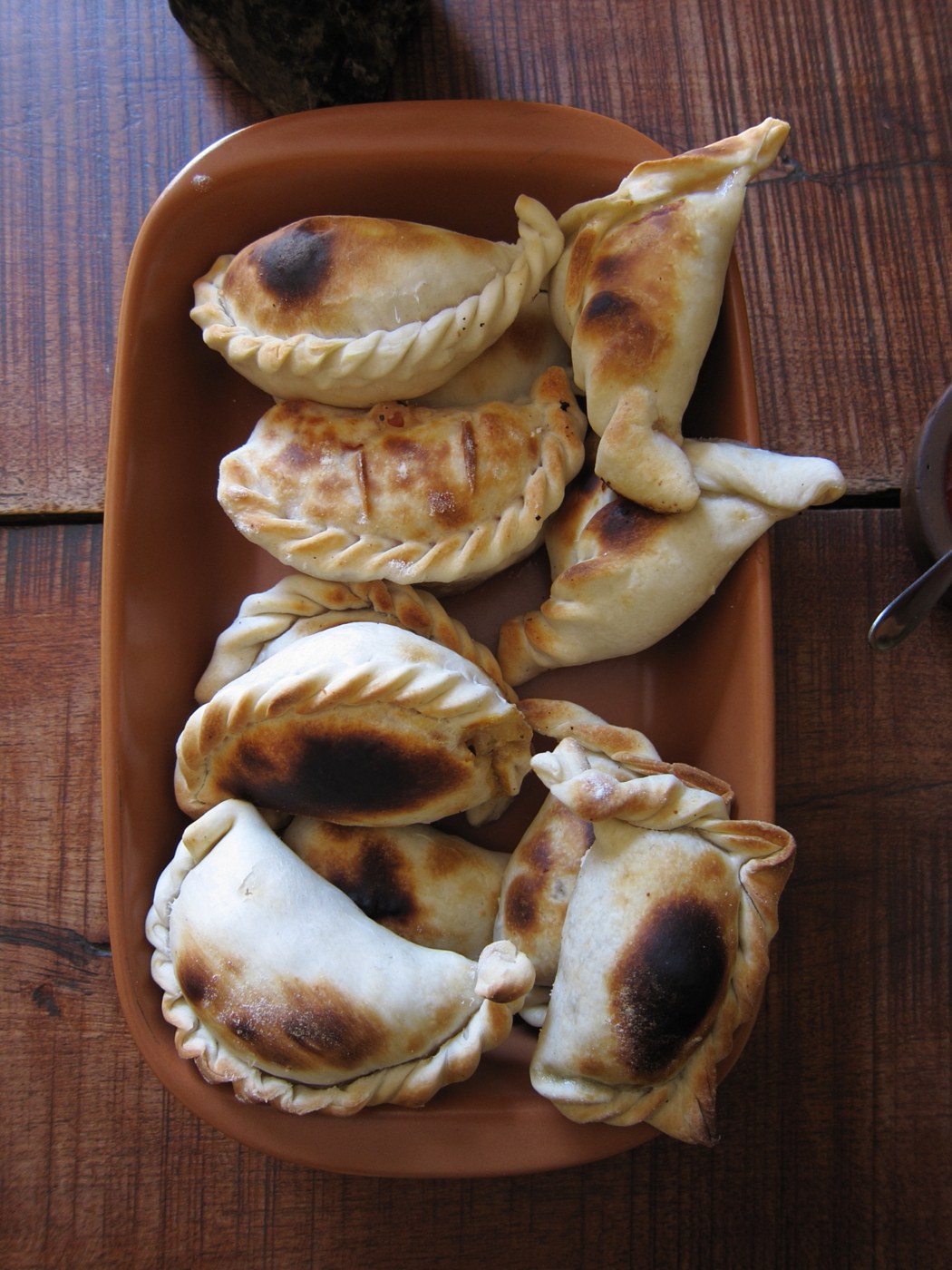

Ordering Salta-style empanadas does not guarantee identical results at two tables. The name points to a recognizable regional tradition, but proportions, meat preparation, dough, and cooking vary by kitchen. That variation is not a problem requiring one correct version to be declared. It can be one of the most interesting parts of tasting them during a trip.
A reference, not a formula
National tourism descriptions often emphasize a small format and a juicy filling containing meat, potato, egg, and seasoning. Treat this as orientation rather than a guaranteed ingredient list. If a component matters because of preference or a dietary restriction, ask about the actual preparation. A provincial name cannot replace the information the person eating needs.
Pastry, filling, and sauce
A simple comparison starts with the pastry. Notice its thickness and balance with the filling, then consider the cooking result. Baked and fried empanadas may have different surfaces and textures without either being an imitation. When ordering several kinds, ask how fillings are identified. Crimp patterns or marks do not necessarily follow a universal code across kitchens.
The filling offers another scale of observation. Cut meat and potato can contribute distinct textures; onion, fat, and liquid affect the impression of juiciness. There is no need to open every empanada to judge quality or demand a family recipe from the cook. A brief question about ingredients and cooking can provide enough context to recognize what you are tasting.
Sauces deserve a separate trial. If a hot sauce is offered, add a little to one bite rather than covering everything before tasting. Its presence on the table does not mean every kitchen expects the same use. Allow a very hot filling to cool slightly as well. Excessive heat can obscure flavor and make the first bite uncomfortable.
Remember what you tasted
To remember differences, note the place, the type ordered, and two specific details such as thin pastry or visible potato. This is more useful than an absolute score. For takeout, ask about storage and avoid treating empanadas as supplies for many hours without appropriate conditions. The fairest comparison is between preparations enjoyed in context, not one freshly served and another left in a backpack.