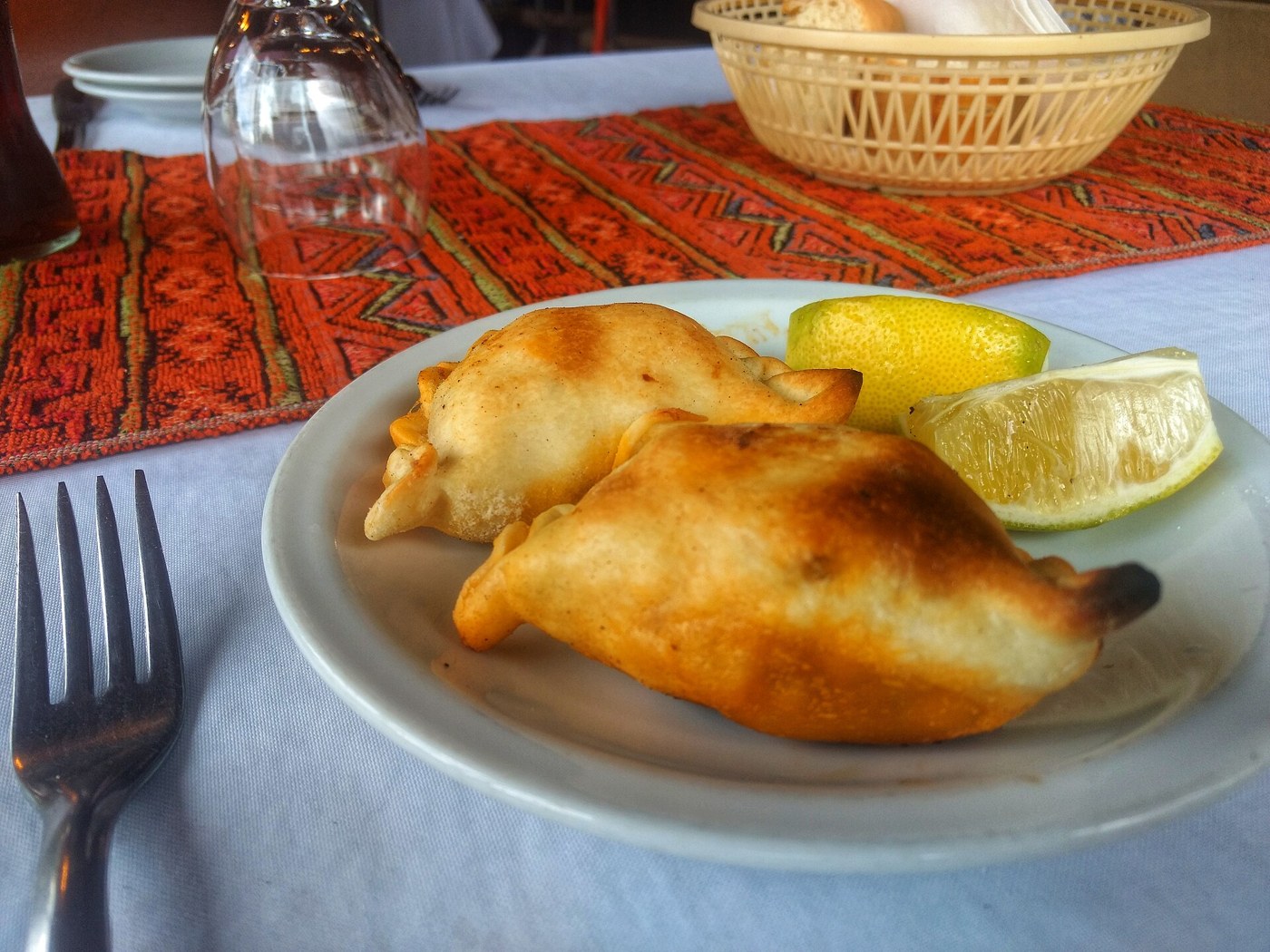

Tucumán empanadas often inspire conversation about meat, juices, and the folded edge before reaching the table. That vocabulary helps reveal cooking decisions, but it can also become a rigid argument over who owns the definitive recipe. For a visitor, it is more useful to ask how the version in front of you is prepared and how it relates to others, without requiring every kitchen to produce the same result.
What this version contains
Tucumán Turismo describes a preparation using knife-cut meat, onion, egg, and green onion, with baking or frying as possibilities. Some regional descriptions identify matambre as a characteristic cut. These references help explain the tradition but do not prove what is inside every empanada sold under the name. Asking about the meat and cooking method is a straightforward starting point.
Knife-cut meat can create a texture different from mechanically ground meat. Notice how it combines with the other ingredients and how the pastry contains the filling. Juiciness does not create an obligation to eat hurriedly. Waiting until the temperature is comfortable makes flavor easier to notice and prevents the first bite from becoming only an effort to avoid spilling.
The closure and its stories
The crimp closes the pastry and may also identify a filling within one kitchen. Stories about a particular number of folds belong to cultural conversation, but they are not a way to certify provenance. Two cooks can close similar fillings differently. Watching the handwork during an agreed demonstration can teach more than counting folds as though they followed a universal rule.
Taste and keep learning
For a food fair or celebration, check information for the current event. Do not assume a stall, competition winner, or tasting format continues unchanged from one edition to another. When comparing preparations, order amounts you can enjoy without waste and allow time between them. A food-focused outing does not need to become a competition in how much can be eaten.
Record ingredients explained to you and separate that information from what you infer while tasting. To reproduce a version at home, find an attributed recipe and follow its complete method rather than combining fragments remembered from several kitchens. A travel experience can begin a precise culinary curiosity without becoming a claim that you already understand every empanada made in Tucumán.