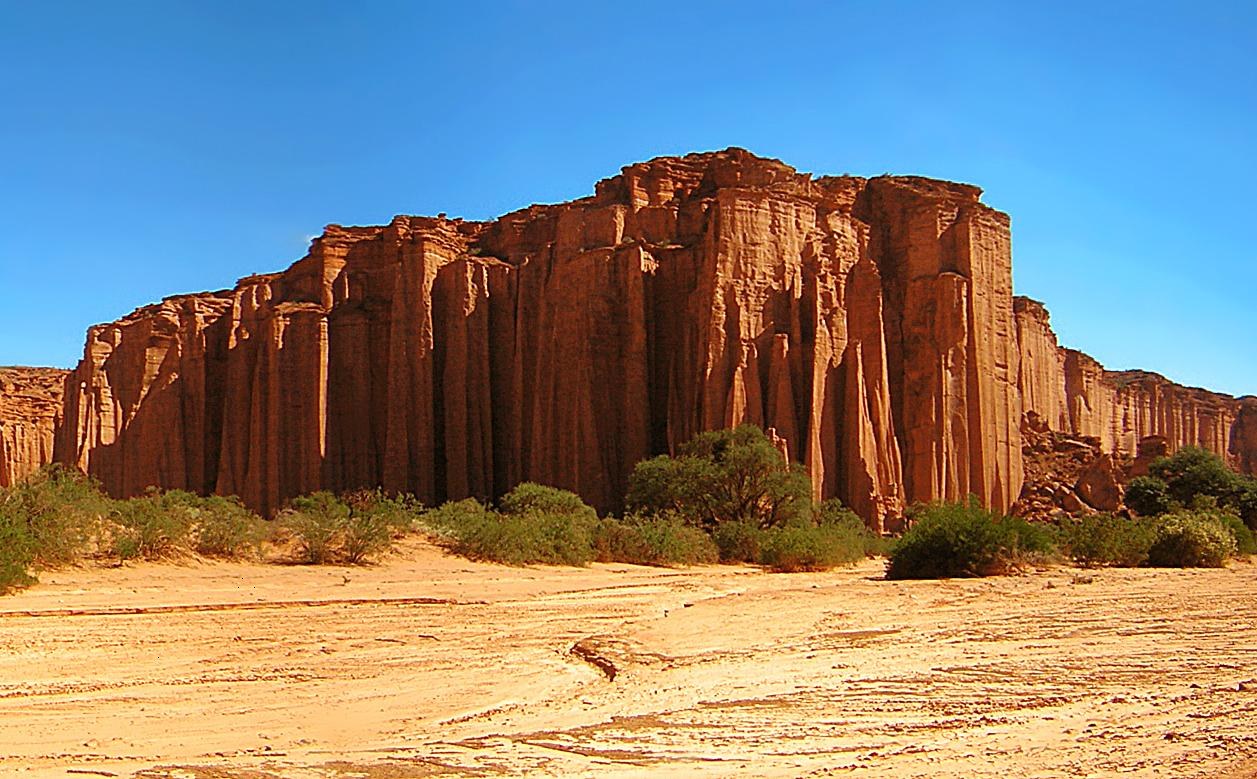

Choosing a Talampaya visit begins with a concrete question: what would you like to understand beyond seeing the canyon walls? An interest in geology, landforms, or cultural heritage can guide your itinerary choice and the questions you ask. The park covers more than the territory shown in one famous photograph. Do not assume that every excursion includes identical areas, activities, or observation time. A clear focus makes the differences between available programs easier to evaluate.
Two timescales in one view
Together with Ischigualasto in San Juan, Talampaya forms a World Heritage property recognized for its continental Triassic record. UNESCO highlights sedimentary sequences and fossils that support research into environments and changes in life during that period. This does not mean every wall contains an identifiable fossil or that today's scenery exactly reproduces that ancient world. The rocks preserve old information, while the landforms now visible also reflect later processes. Keeping those timescales separate makes an explanation easier to follow.
During a guided discussion, distinguish a layer from an erosional form. A layer relates to the arrangement of rock material; a column or wall describes the visible geometry of the landscape. Ask what evidence connects different levels and which parts of the story require research beyond the visitor stop. This prevents every striking shape from becoming supposed proof of the canyon's age or of dinosaurs having occupied that exact spot. A useful answer should connect an interpretation with evidence.
The present environment
The park also protects environments of the Monte de Sierras y Bolsones. Today's vegetation deserves attention even when the enormous walls dominate the view. From the authorized route, notice whether plants are scattered or concentrated and how they relate visually to depressions, channels, or rocky surfaces. Treat those differences as questions for your guide, without picking leaves or identifying species only through resemblance to a photograph. Geological history and contemporary ecology can be considered together without becoming the same story.
Comparing specific itineraries
When booking, compare the specific circuit, meeting point, included transportation, walking, and available services. Official information distinguishes access points for different sectors: a reservation saying Talampaya is not enough to determine where to arrive. Also establish which charges and arrangements are included and which are handled separately. Programs, capacity, and entry conditions can change. An editorial description cannot replace operational information from the park and your provider for the date of your intended visit.
On the excursion, listen to explanations before concentrating entirely on photography. Where archaeological heritage is involved, follow the specific instructions and avoid touching surfaces or looking for objects beyond permitted areas. Do not collect fragments that seem interesting either: removing their context takes away part of the information that makes them valuable. A well-chosen organized visit is measured by more than its number of stops. What matters is the opportunity to observe and understand at each one.