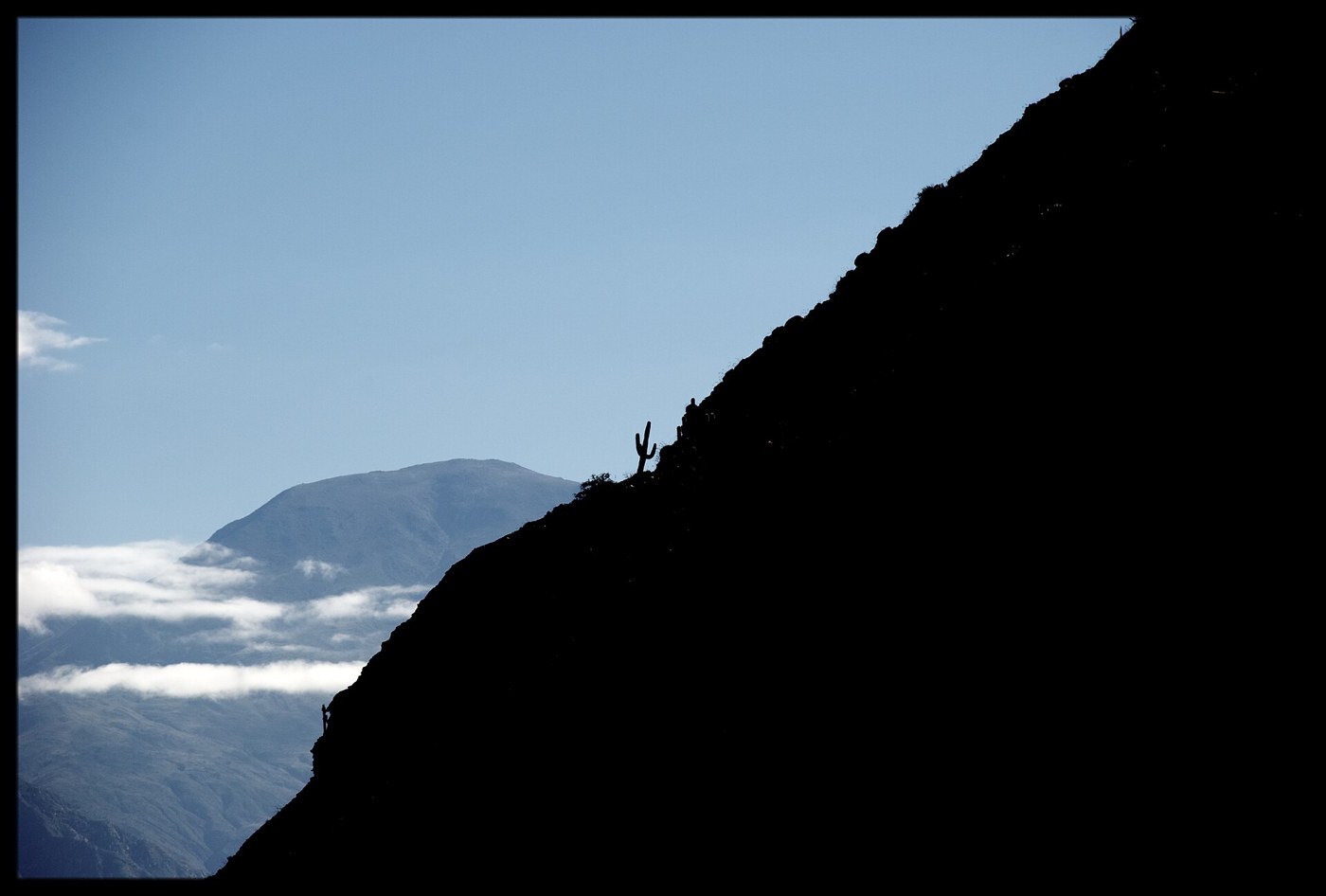

The Calchaquí Valleys extend through parts of Salta, Tucumán, and Catamarca. That regional continuity does not make every section look alike or function in the same way for travelers. A provincial map shows one portion; an actual journey must connect that portion with access roads, settlements, and decisions about where to stay. Thinking of the valleys as a system explains why Cafayate, Cachi, Amaicha, and Santa María can share a broad setting without becoming interchangeable destinations or stops that must all be joined into a single compulsory loop.
A region is not the same as a circuit
La Ruta Natural presents an experience spanning the three provinces and, separately, a Salta circuit linking Cachi and Cafayate. The distinction matters: a regional overview describes relationships, while a circuit organizes a particular journey. Copying an itinerary without recognizing its scale can lead travelers to assume they have covered the entire region or to attempt too much. Choose the section that interests you and the number of nights you can give it first. Add connections that make sense afterward, rather than trying to achieve complete coverage of a geographical name.
Approaches reveal transitions
Approach roads tell an environmental story too. Arriving through the humid slopes of Tucumán creates a different transition from traveling through dry country between Salta villages. You do not need to identify every species to notice changes in vegetation density, terrain, and cultivated areas. Recording those differences avoids describing the entire journey with a single label such as desert or mountain country. Regional unity coexists with strong contrasts, and those contrasts are often more revealing than the search for one image that supposedly represents all of the valleys.
Cultivation in different settings
Agriculture offers another form of continuity. Cultivated spaces connect with settlements and ways of using water, but products and visitor experiences vary from place to place. A winery visit, a discussion about crops, and a market should not be treated as equivalent activities. Choose the subject you want to explore and ask about its local context. A practice observed in one village should not automatically be used to explain life in another. Communities retain their own identities and decisions within the wider region, and a useful visit makes room for those distinctions.
Keeping different pasts distinct
Archaeological heritage requires the same attention to difference. A museum can help establish timelines and relationships before a site visit, preventing every surviving structure from being grouped under a vague idea of an ancient past. Available interpretation, access arrangements, and community participation vary. Continuing occupation of a territory does not mean that every structure belongs to the same period or that every tourism narrative has equal supporting evidence. When a detail is unexplained, leaving a question open is better than inventing a purpose for a wall, object, or space.
A route that allows comparison
For route planning, the best connection is not always the shortest in miles. Road conditions, the time spent at stops, and where the day ends matter more than drawing a perfect loop. Exploring one section carefully and leaving another for a future trip is entirely reasonable. A rewarding Calchaquí Valleys journey allows comparison without flattening differences: noticing what connects settlements, understanding what changes between them, and retaining enough time for each stop to have a meaning of its own beyond its position on the route.