
La Rioja's Quebrada del Cóndor belongs to the Sierra de los Quinteros landscape, approached from the area around Tama. It is not Quebrada del Condorito National Park in Córdoba: distinguishing the names prevents booking an excursion or finding directions for the wrong province. At the Riojan destination, rocky walls and open space above the valleys frame an outing built around observation rather than chasing an appearance.
Reading the setting before a sighting
Provincial tourism information describes granite in different colors and steep terrain. From an authorized stopping point, first look at the structure of the landscape: walls, ledges, hollows, and connected slopes. These provide references for following a distant bird. Saying “above the wall on the left” helps others share an observation more effectively than simply raising a camera without indicating a direction.
Condors can use rising air to gain height while soaring. Circling flight reveals a relationship between air and terrain, although an observer at a viewpoint cannot measure the particular current used by each bird. Watching a sequence for several minutes can show more than a photograph: changes in apparent height, a crossing above a slope, and how long the bird remains visible before disappearing behind the terrain.
Guidance and expectations
A guided visit helps locate observation points and interpret the surroundings, but it does not turn wildlife into a guaranteed program. Ask about access conditions, the walking portion, and the total duration of the outing. Promotional accounts of close or numerous sightings should not become minimum expectations or reasons to move toward cliff edges.
While waiting, keep the group quiet and follow instructions about distance and position. Do not use food, sounds, or drones to provoke a response. If a bird remains distant, the record may be a silhouette within the landscape; using optical magnification is different from changing the route to intercept it. There is also no need to assign age or sex when the viewing distance prevents a clear examination of the necessary features.
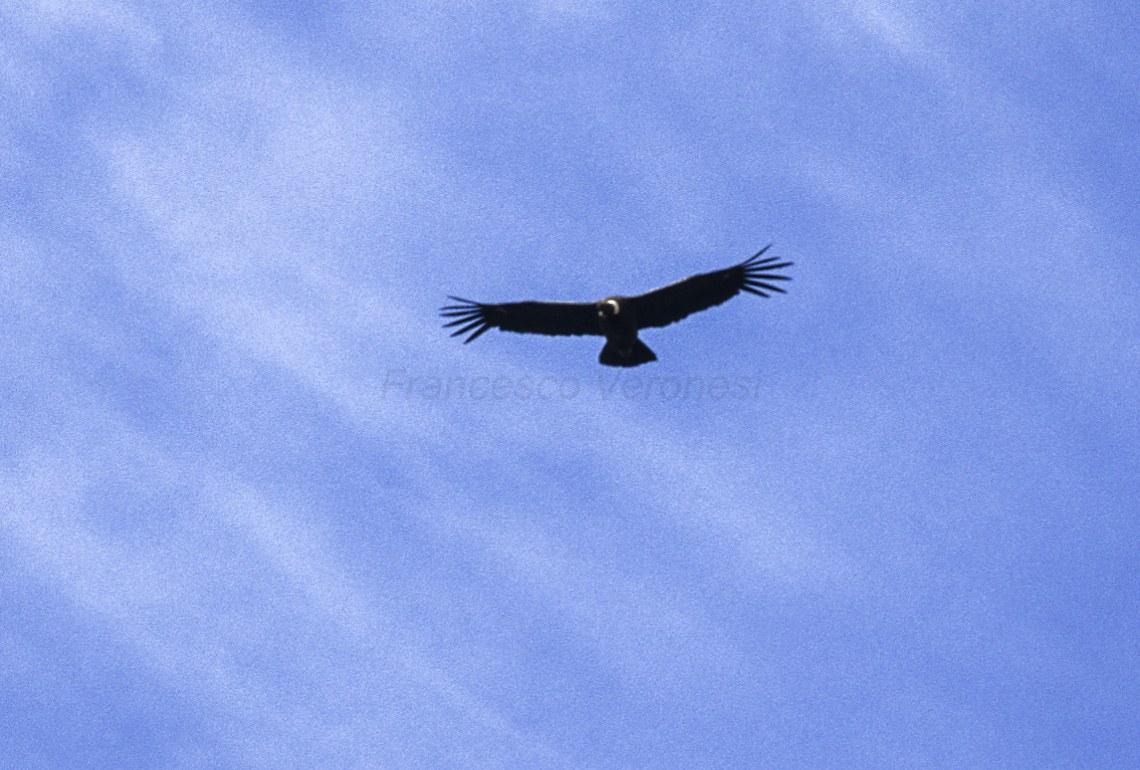
The photograph accompanying this article shows an Andean condor in Argentine Patagonia. It illustrates the species rather than documenting a sighting at this gorge. The distinction matters in your own notes too. Record date, location, and circumstances without turning one observation into a promise for the next visitor. The terrain, the waiting, and the possibility of flight together make up the experience.