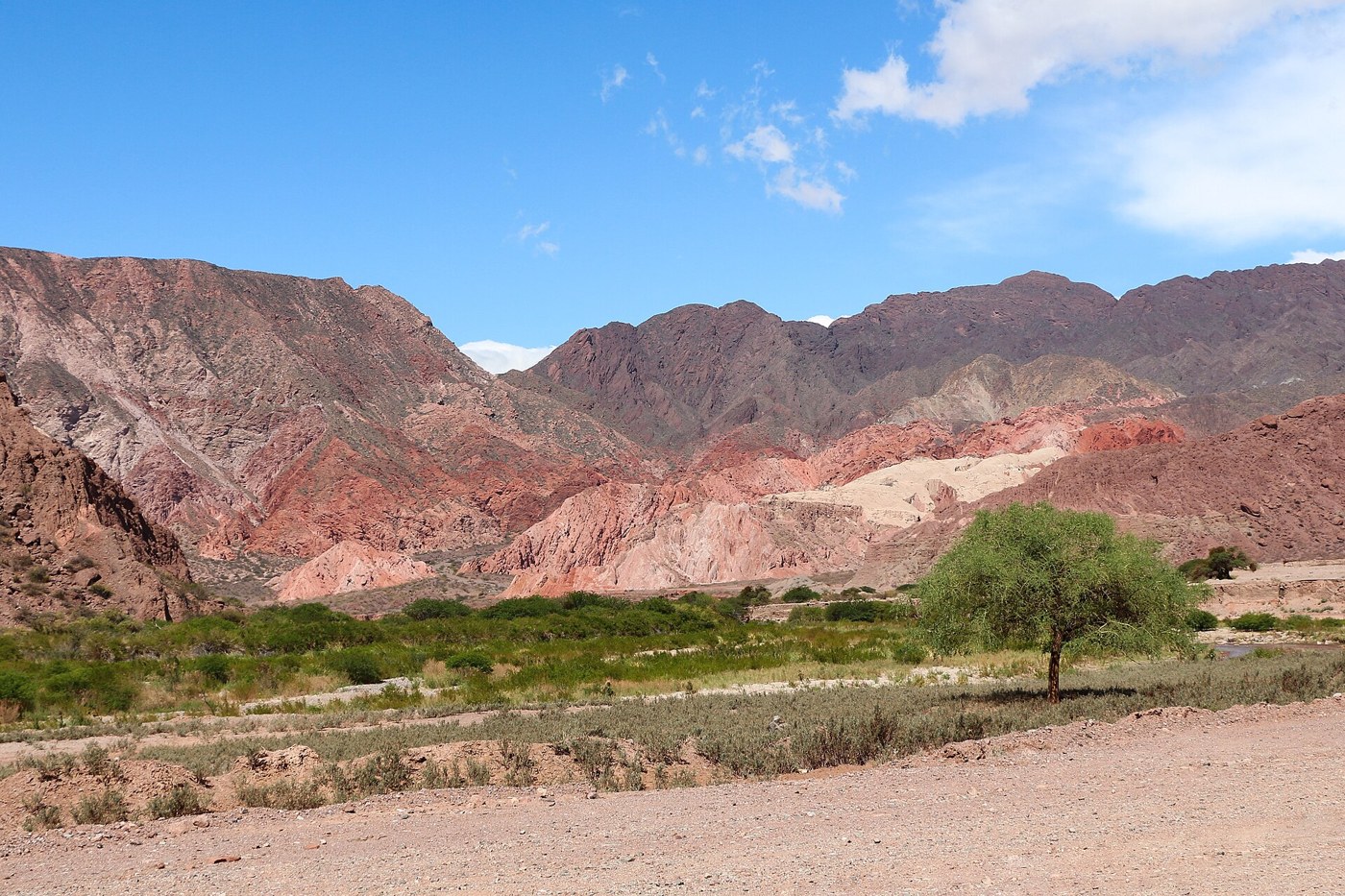

Quebrada de las Conchas makes the road between Salta and Cafayate more than a transfer. Along Route 68, formations have memorable names, but those names do not explain the landscape on their own. A visit gains depth when travelers compare layers, slopes, and erosion patterns instead of stopping only to confirm that a rock resembles an object. Choosing a few places for sustained attention can be more revealing than trying to collect every named shape along the road in a single hurried journey.
Choosing stops with different perspectives
La Ruta Natural includes places such as La Yesera, Tres Cruces, and the Anfiteatro in its regional circuit. Each offers a different perspective: examining strata, understanding a broad view, or sensing the scale of an enclosed rock space. They do not all have the same access arrangements or room for visitors to move around. Check authorized areas and follow existing paths. Climbing a wall for a better angle can damage surfaces and turn a simple roadside stop into an activity that the designated visitor route does not accommodate.
Form and its explanation
Color provides an initial clue, but not a complete explanation. Two layers with different appearances can prompt questions about their materials and the conditions in which they formed; answering those questions requires geological interpretation rather than visual comparison alone. Erosion acts on materials with different resistance and leaves forms whose appearance shifts with the viewing position. A guide can help separate that explanation from tourism nicknames. Both can be enjoyable without treating an imaginative resemblance as the actual origin or scientific identity of a formation.
A road that deserves time
The road remains a working traffic route. Stop only where parking is permitted and safe, and do not use the roadway as a photography position. If the outing is part of a long transfer, allocate time for stops before deciding when you expect to arrive. There is no need to turn the gorge into a race against changing light. One section observed carefully, with attention to detail and respect for restricted areas, produces a clearer understanding than a sequence of quick exits from the vehicle.