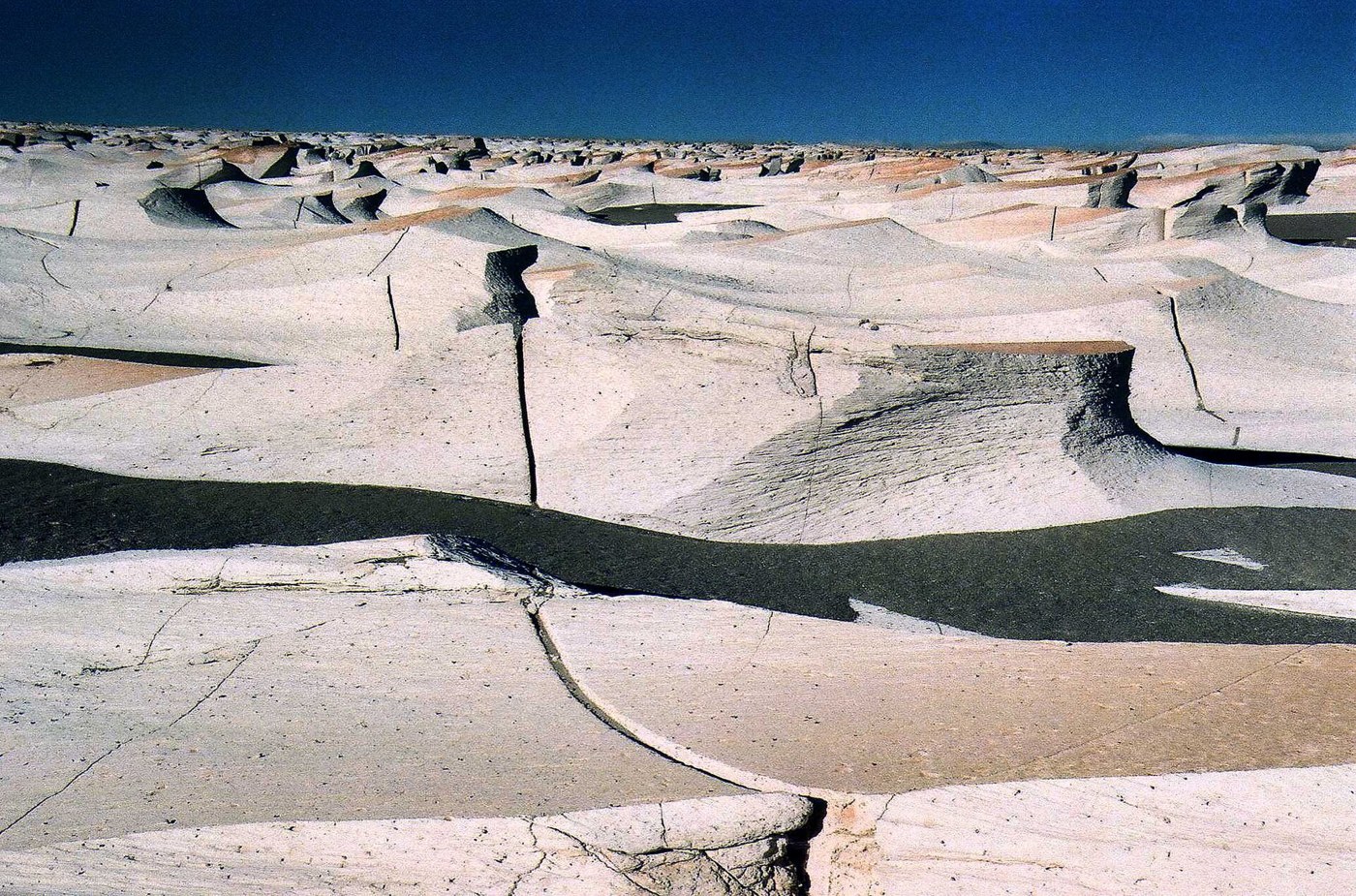

A pale wall can appear smooth from a distance and reveal a completely different surface when light reaches it from the side. At Campo de Piedra Pómez, that change of scale provides a useful introduction: first the whole landscape, then a single form, and finally its texture. This expanse of volcanic rock in the Catamarca Puna rewards slow observation. Finding a shape resembling an animal, or taking a photograph without people, need not be the entire purpose of the excursion.
Material and landform
The material and its shape tell connected but different stories. Geological research on the field's yardangs connects these landforms with wind erosion acting on ignimbrite deposits. An ignimbrite is a deposit associated with currents of volcanic material; a yardang is an erosional landform. Describing everything visible as something built directly by an eruption therefore overlooks the later processes that transformed the deposit. You do not need to assign an exact age to every wall to understand this distinction.
Try separating three questions during a guided explanation. What is the rock made of? What process placed that material here? Which processes produced the shape now visible? These are different questions, even when a short tourism description combines their answers. If someone identifies a layer or surface, ask them to point out the visible evidence: a texture change, a continuous level, or the orientation of several forms. This connects a technical word to something you can actually examine in the landscape.
Light as an observation tool
Light changes that reading too. A face illuminated directly may lose its small shadows, while a side face reveals relief that previously seemed absent. Comparing them does not require entering restricted areas. Choose a permitted viewpoint and notice how an edge separates the surfaces. In a photograph, an appropriate scale reference helps distinguish a small detail from a much larger rock face. Do not ask another person to climb a formation simply to demonstrate its size.
Color deserves similar caution. A warm tone in a photograph may reflect the time of day, dust, or camera settings. It is not enough to identify a mineral independently or reconstruct an eruption. Record what you actually observed separately from the interpretation you heard from a guide. That small distinction lets you revisit the explanation later without turning a visual impression into a geological fact. It also leaves room for questions that a short visit cannot reasonably settle.
Planning an achievable visit
National tourism information places the field above three thousand meters and identifies El Peñón as the main approach, with a suitable vehicle and local guidance recommended. Before booking, ask about the actual itinerary, walking involved, permitted stopping places, and conditions that could change the program. An excursion name does not describe its demands. A day combining several attractions also does not mean spending the entire day exploring the field itself. Allow the operator to explain those differences before comparing offers.
At the end, choose one observation you can describe without exaggeration: a surface with contrasting textures, several aligned forms, or a changing shadow on a wall. That is more rewarding than bringing home a supposedly definitive explanation of the entire landscape. Leave stones and fragments in place; record texture in a photograph or notebook. The experience becomes richer when curiosity does not require taking away a physical piece of the place you came to understand.