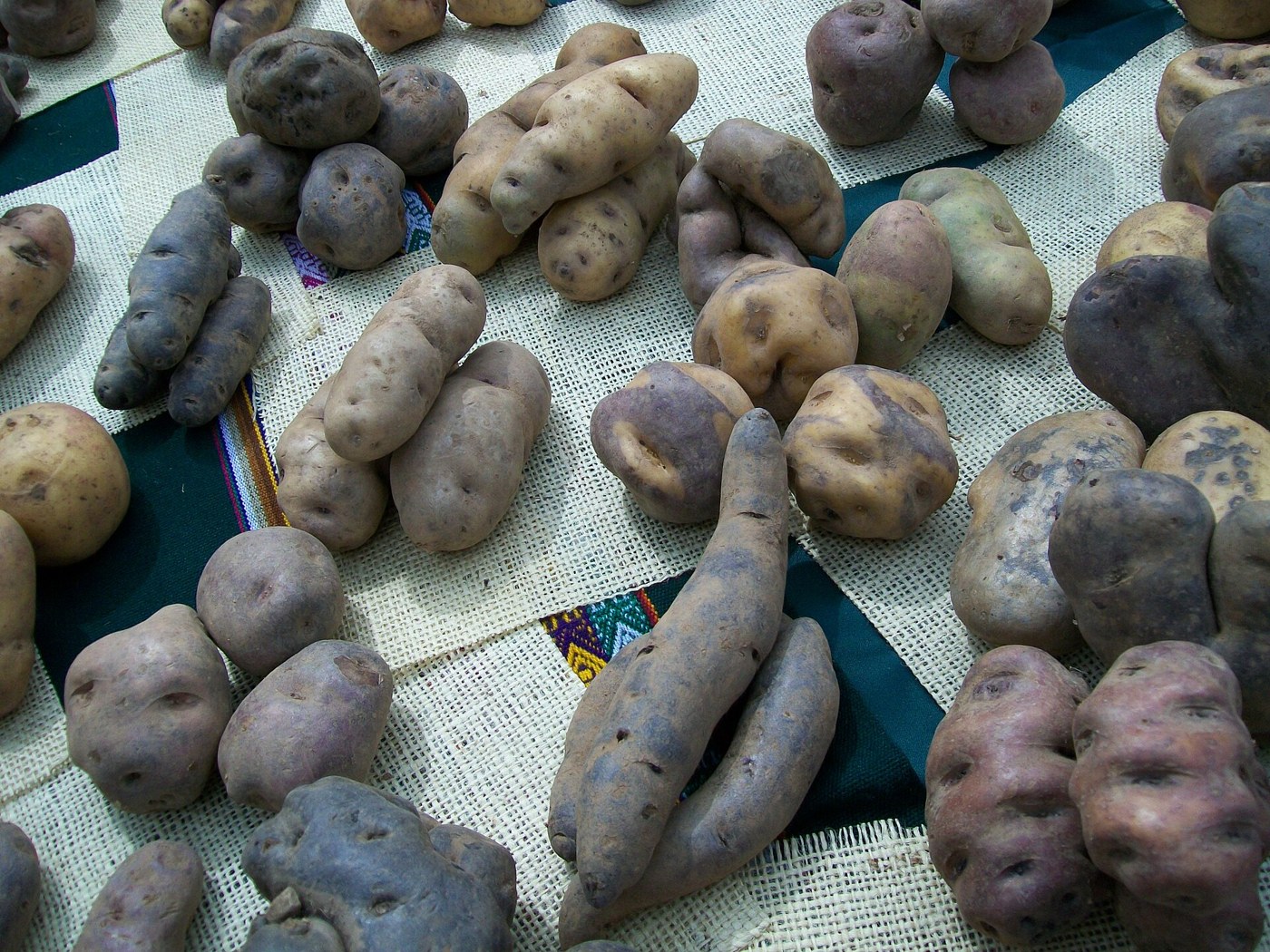

A plate of small potatoes in several colors may attract attention before anyone explains where they came from. Visible variety is a useful introduction, but it does not tell the whole story. Andean potatoes belong to systems of cultivation, selection, and exchange maintained by farmers. Reducing them to a photogenic side dish overlooks the work that allows different varieties to remain in cultivation.
Diversity with names
Senasa's Andean tuber program describes diversity maintained through producer and community practices alongside technical work. Its information also distinguishes potatoes, oca, ulluco, and other tubers. These are not simply commercial names for one plant. At a market, grouping everything as colorful little potatoes may conceal important differences in species, uses, and preparation.
Shape and color support observation but cannot reliably identify a variety on their own. A photograph without scale, particular lighting, or a broadly used name can be misleading. If a seller knows the name and origin, record them together. If they do not, preserving that uncertainty is more accurate than filling the gap with a name found on another website.
What texture reveals
In cooking, texture may be as interesting as color. Some potatoes retain their form in a preparation, while others behave differently in mash or stew. Their properties should not all be inferred from appearance. Asking a grower or seller which dish suits a variety connects the ingredient with a specific use and with working knowledge.
A simple tasting can compare two varieties prepared in the same way. If one is fried and another boiled, technique introduces a difference that makes it harder to attribute everything to the tuber. Lunch need not become a formal experiment. It is enough to recognize what changed. Notes about firmness, flavor, and cooking method can explain more than classification based only on size.
Without exaggerated promises
Diversity should not become an exaggerated nutritional promise either. Intense color does not guarantee that an ingredient solves a health need, and one serving cannot represent a whole diet. These potatoes can be appreciated through agriculture, cooking, and heritage without assigning properties that a plate cannot demonstrate. A personal dietary question should not be resolved from a tourism label.
From market to luggage
Buying food to eat during a trip differs from transporting tubers to another region or country. Plant products may face controls and requirements depending on origin and destination. Before packing them, consult the relevant authorities instead of assuming a small bag is exempt. An identified photograph, a recipe, or notes from a conversation may be easier memories to carry home.
When Andean potatoes next appear on a menu, look for a variety name, producer, or growing area. Not every restaurant will have this information, but when available it connects the table with the field. That connection recognizes that diversity is not maintained only in collections or seed banks. It also depends on people who grow it, understand it, and continue finding uses for it.