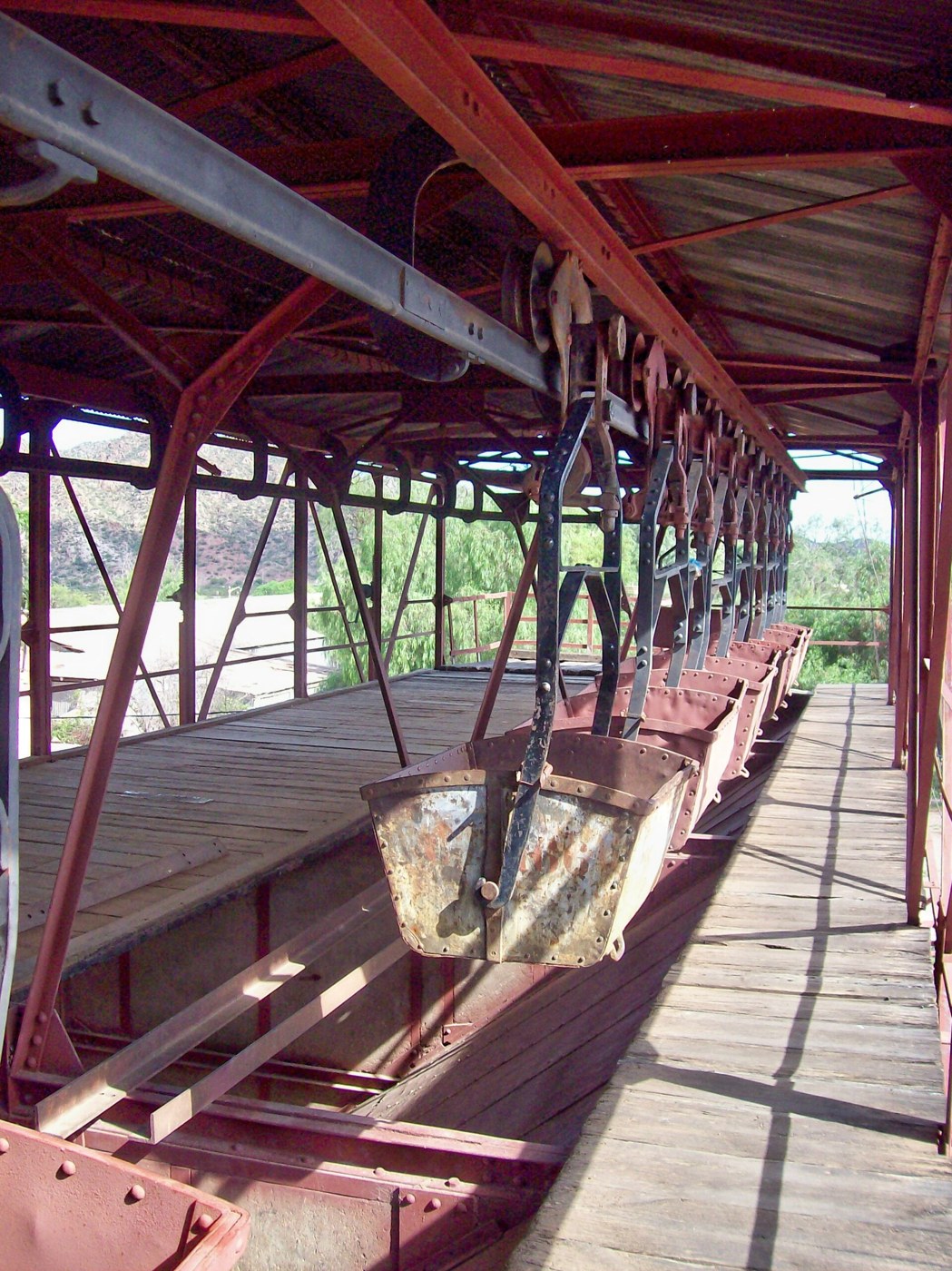

The Chilecito–La Mejicana cableway can impress through its towers and the distance it appears to cover across the mountains. Understanding it, however, requires imagining loads, energy, maintenance, and people at work rather than height alone. This is industrial heritage: infrastructure built to move materials between a mine and other parts of a production system, not an operating tourist cable car that visitors can board today.
Loads in two directions
National heritage documentation explains that mineral traveled downhill while supplies moved in the opposite direction. The system connected stations and sections, with communications helping coordinate operations. This two-way movement provides a useful reading of the site. Ore did not simply pass from a mountain into a station. Extraction, transport, provisioning, and connections with other means of movement formed a chain.
Components that worked together
Within authorized visitor areas, begin by identifying what you are seeing. A pulley, support, and carrier may look unrelated until a plan shows how they worked together. Ask which pieces remain in their original positions, which were moved, and which parts survive as evidence. A missing component can also matter when explaining how the complete system operated.
The scale raises questions about maintenance. How was a system extending across difficult terrain inspected? What did stations need in order to operate? How did they communicate? You do not need an engineering background to ask these questions. They bring human labor into a story that accounts focused only on length and elevation often leave in the background.
Heritage and present access
Separate a heritage visit near Chilecito from an excursion into high mountain areas. Stations do not all share the same access or visitor arrangements. A historical map shows where infrastructure stood, not current road conditions or permission to follow it. Consult current circuits and avoid climbing structures, entering closed buildings, or following cables beyond permitted areas.
Distinguish period information from tourism superlatives too. Knowing when an installation operated and what it carried is more useful than repeating that it was the largest of its kind without identifying the comparison period. Afterward, try describing one complete operation: what arrived, what departed, and what work made it possible. This narrative gives meaning back to the components and reveals the Famatina landscape as a territory shaped by productive decisions and their consequences.