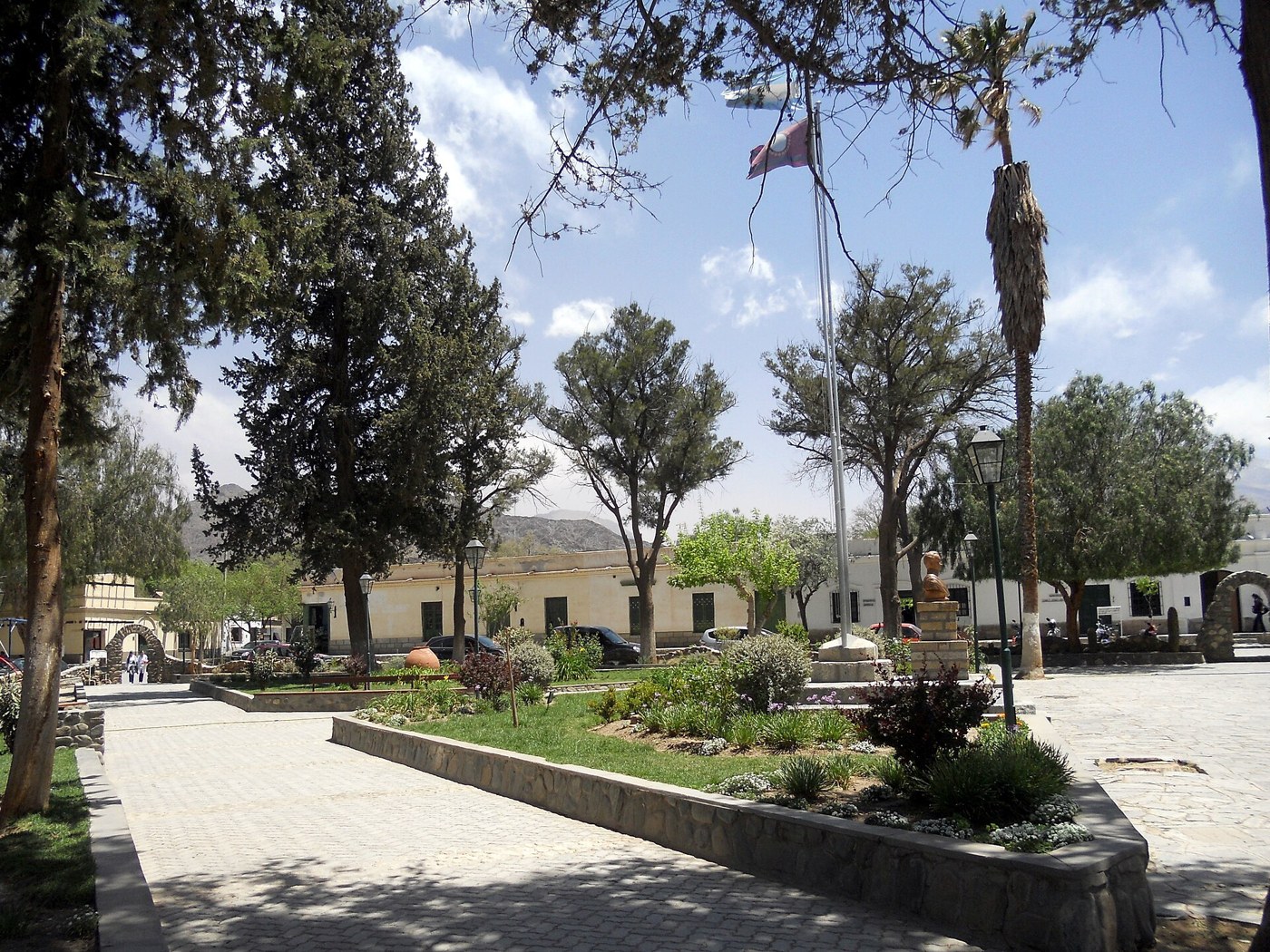

A plaza can seem like the easiest place to visit: arrive, photograph the monument, and move on. Yet a few minutes of observation often change that impression. The paths people take, the location of shade, and surrounding buildings reveal relationships a straight-on photograph misses. In northern towns, this pause offers a way to understand public space without turning residents into performers for visitors.
Locate and observe
Begin by orienting yourself. Locate approaching streets and recognizable frontages: a church, municipal building, shops, or homes. Do not infer a building's function solely from its size or apparent age. Salta's central square, for example, connects the Cabildo with a larger urban setting. Other towns organize uses differently and deserve to be read on their own terms rather than through one borrowed description.
Choose a seat that does not block movement and notice how the space is used. Do people cross the middle or follow the edges? Which parts provide shade? Is there room for playing, waiting, or meeting? These questions do not require a grand theory of local life. They help you observe a specific situation at a specific time without turning one quiet morning into a claim about the entire year.
Memory and boundaries
Monuments and plaques offer another reading. Note whom they commemorate, who installed them, and when, if those details are available. The date of a memorial may differ from the date of the event it recalls. Comparing the two helps explain how public memory is created. If a name is unfamiliar, look for a local source afterward rather than inventing an explanation to fill the gaps in a short inscription.
Observation has boundaries. Avoid photographing private conversations, children, or people resting without permission. An open business is not a stage set, and a celebration may need the space occupied by a visitor group. For an overall photograph, choose a position that allows people to pass and accept ordinary objects as part of the scene instead of trying to clear them away.
Return to the same corner
If your itinerary allows, pause again on the return journey. The aim is not to discover a supposedly authentic hour, but to notice changing light and activity. The plaza can become a reference point for understanding the town. What you learn may be modest: where to wait, which building you want to explore, or which question to take to a museum. That smaller scale of discovery has value too.