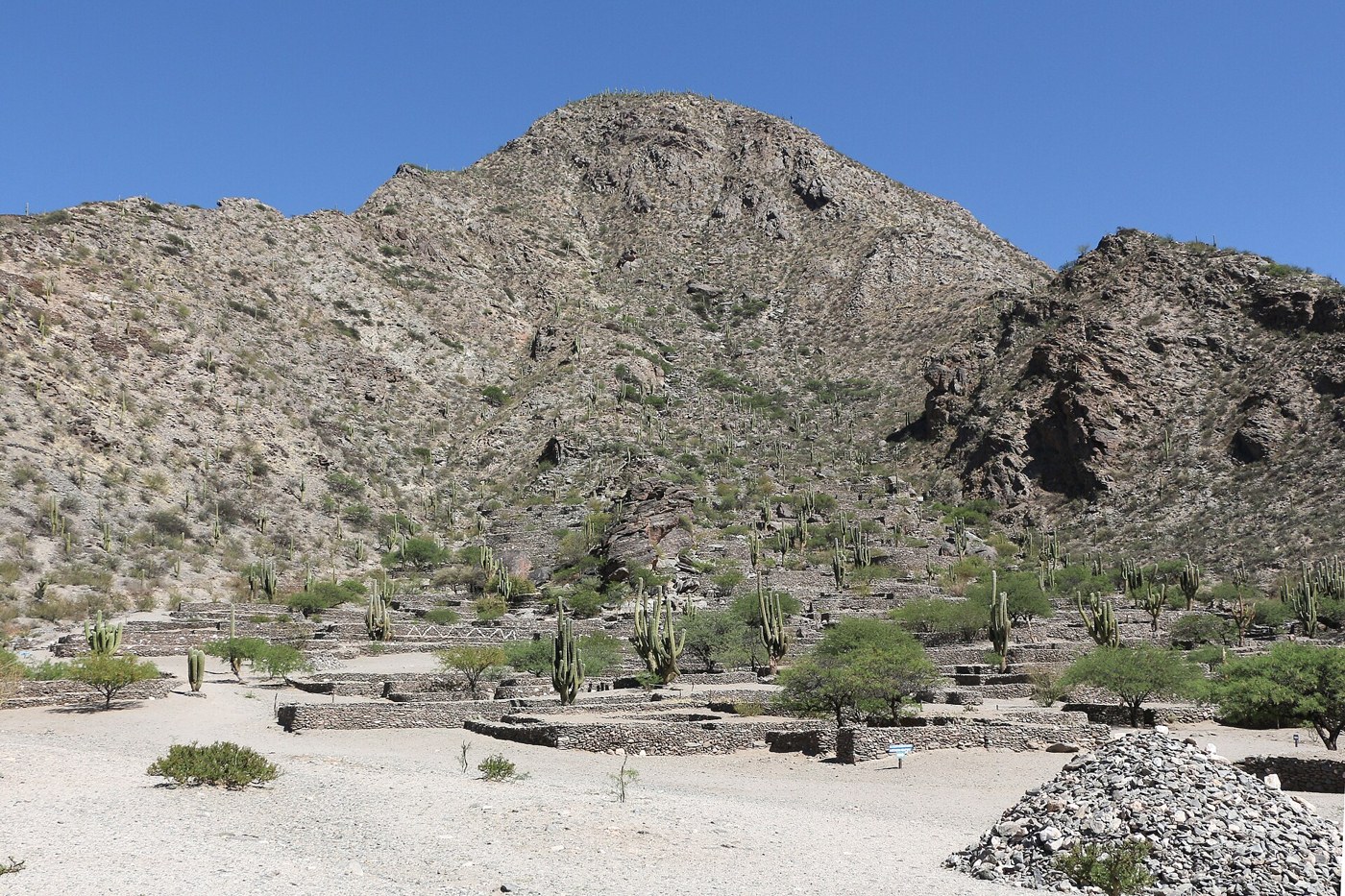

Calling Ciudad Sagrada de Quilmes “ruins” describes part of its physical appearance but leaves out an essential dimension: its relationship with a living community. This site in Tucumán's Calchaquí Valley is more than a collection of walls to walk around. It is also a place where history is interpreted, identity is expressed, and decisions are made about receiving visitors.
Begin with interpretation
The interpretation center offers a way to begin with the story before walking among structures or climbing higher. Provincial tourism information describes residential sectors and elevated areas of the settlement, but a general description cannot replace explanations from people working at the site. Ask which routes are open and what visitor arrangements the community currently offers. Admission to a heritage place does not imply unrestricted access to every part of it.
One useful question for a guide concerns the relationship between reconstructed areas and excavated evidence. Another concerns how Quilmes continuity is described after the settlement's forced abandonment. Hearing both helps prevent an apparently neutral archaeology from becoming detached from the people whose history is involved. Do not expect a single voice to represent every experience; memories and interpretations can contain differences.
Walking and conversation
During the walk, observe scale and connections. Distances between enclosures, slopes, and the relationship with the valley can suggest questions about everyday work and spatial organization. Remain within the marked circuit. A low wall is not a bench, and a fragment on the ground does not become an available souvenir because it looks small. Photographing the whole scene from an authorized position preserves the connection between buildings and landscape.
If crafts or cultural activities are offered, ask who produces them and how the activity is organized. Buying something does not entitle you to a private story, and paying for a visit does not authorize photographing everybody present. Ask before taking portraits and accept a limit without argument. Small decisions like these make respect part of the actual visit rather than a word in an introduction.
How to describe the visit
Allow time to listen and rest instead of treating the site as a short stop between destinations. Check access, weather, and current arrangements before leaving; a route suitable for one group may not suit another. When describing the experience afterward, use the present tense for today's Quilmes community. That detail keeps the distinction visible between studying material remains and wrongly declaring a people finished.