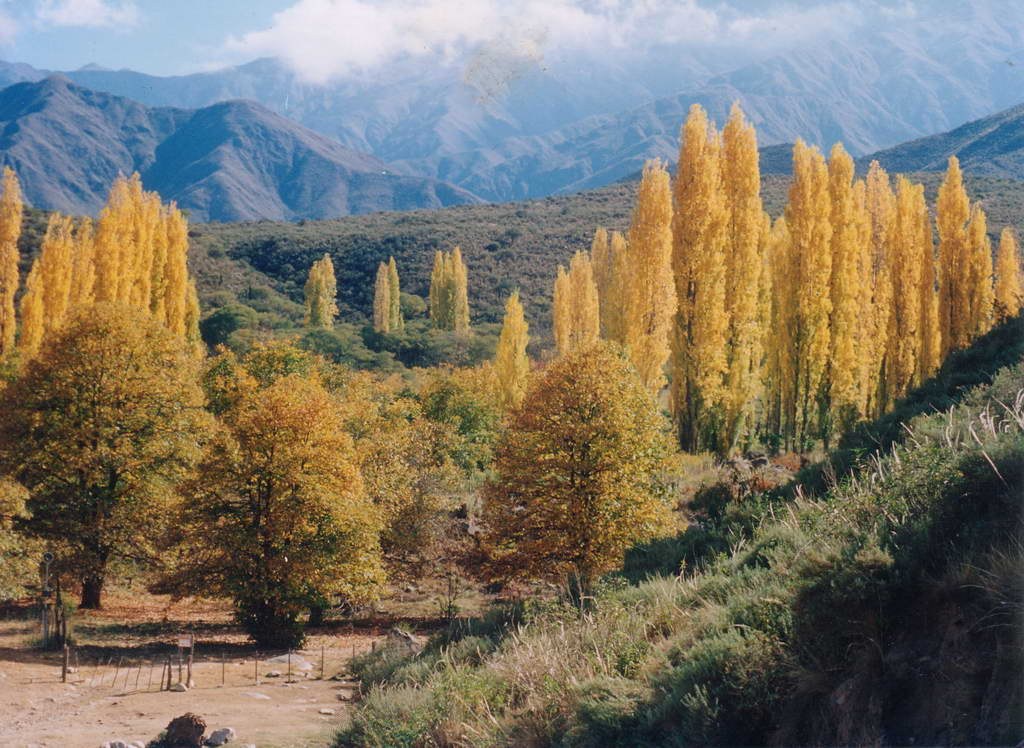

Famatina can refer to the village, the administrative department, or the mountain range. Keeping these scales separate avoids a common misunderstanding: arriving in the village is not the same as undertaking a high mountain excursion. The settlement offers access to a rural landscape where cultivation and small businesses are part of everyday life. It can anchor an unhurried visit built around arranged outings and conversations about local production, without making a summit or distant mining site the objective of the day.
Reading a productive landscape
Agriculture provides a useful starting point. National documentation on production in La Rioja identifies walnut growing in the department, while tourism information connects Famatina with the regional wine circuit. From public roads, visitors can observe cultivated plots and their contrast with surrounding slopes. Going inside a farm requires an invitation or an arranged visit. An open gate does not turn working land into a public attraction, and the agricultural season affects how much time a producer can spend welcoming visitors or explaining a process.
Questions for a rural visit
Questions about water, harvests, and where products are sold help explain the relationship between the mountains and the village. Buying directly can support that conversation when the business sells to the public. Do not assume that every jar or bottle comes from the same locality: asking about its origin reveals meaningful differences. It also avoids making one dish or occupation stand for every family in the area. This productive landscape reflects contemporary decisions as well as knowledge and practices passed between generations, and both deserve attention.
Separating the village from the expedition
Save outings into higher terrain for a separate plan with precise information about access, ground conditions, and the provider. Views from the village can suggest a closeness that says little about travel time or the demands of the route. For a first visit centered on Famatina itself, combining a village walk with a confirmed rural experience is more coherent than improvising a long mountain trip. The mountains remain an essential presence, but attention also falls on the people who cultivate and inhabit the valley beneath them.